Urology
Benign Prostatic Hyperplasia (BPH): A Common Condition as Men Age
May 2026

Author: Dr. Suchindraprasad Unni T, Senior Consultant - Urology
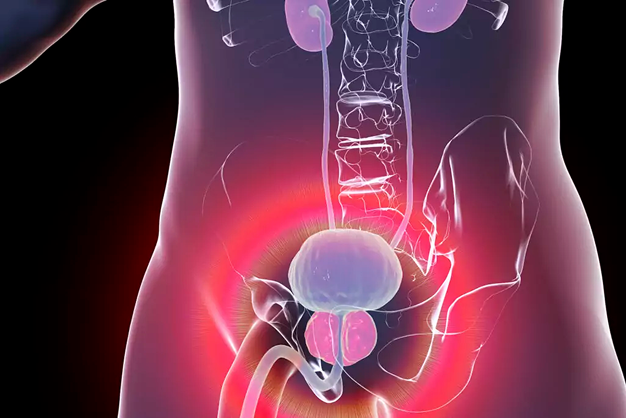
If the image that comes to your mind when you hear robotic surgery is that of a cold, metallic machine performing an operation, you are mistaken. In reality, robotic surgery in urology is one of the most human-centred and revolutionary advances in modern medicine. Its impact has been greatest in urology, the branch of surgery dealing with the kidneys, urinary bladder, and prostate gland.
Performing some of the most complex operations in urology using robotic technology is no longer a luxury, but has become a standard of advanced treatment. However, through this article, we hope to clear some of the common doubts that people have about Robotic Urologic Surgery.
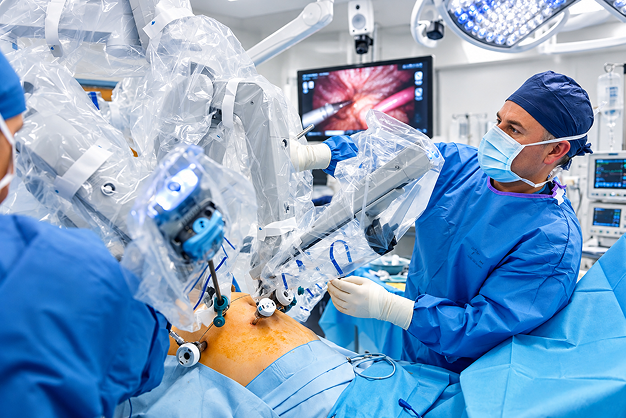
In robotic surgery, the robot does not make decisions or perform the operation on its own. Every moment of the operation remains completely under the control of the surgeon. This system can be considered similar to a co-pilot in an aircraft.
Just as in laparoscopic surgery, a camera and specialised instruments are inserted through small openings in the abdomen. The surgeon sits a few feet away from the patient, at a specialised console in the same operating room, and views the area being operated on through a high-definition 3D stereoscopic viewer.
This system provides images of the surgical area magnified up to ten times, offering much clearer and more detailed visuals than direct viewing. The robotic system translates the movements of the surgeon's hands and fingers into extremely precise movements of the instruments inside the patient's body.
In traditional surgeries, large incisions were required to reach deep areas of the body. To overcome this, keyhole surgery or laparoscopy can be used to perform highly complex operations to a certain extent.
In certain areas of the body, robotic technology offers a level of precision beyond the movements that can be achieved through laparoscopy. Unlike laparoscopic instruments, robotic instruments have additional wrist-like movements, allowing the surgeon to perform more precise movements with greater ease. This is one of the important advantages of robotic surgery in urology, with studies and clinical experience showing improved outcomes in selected procedures.
By eliminating minor hand tremors that may occur during an operation, the robotic system enables the surgeon to achieve a high level of precision. This is one of the key Robotic Surgery Benefits in complex urological procedures.
Adopting robotic techniques in urological surgeries makes treatment easier in many cases. We are moving away from large incisions towards keyhole approaches through Minimally Invasive Robotic Surgery.
These advantages have contributed to the increasing use of robotic surgery for prostate cancer, robotic kidney surgery, and other advanced urological procedures.
What operations can be performed more effectively using robotic technology?
Surgery for prostate cancer is highly complex. The prostate gland is located deep in the lower part of the abdomen, and complications that may occur when removing it include loss of urinary control and erectile dysfunction. Robotic prostatectomy has helped significantly reduce the possibility of these complications in appropriately selected patients.
For small cancerous tumours, removing only the affected portion of the kidney may be sufficient. Robotic partial nephrectomy can help reduce blood loss and allows the tumour to be removed completely and precisely while preserving as much healthy kidney tissue as possible.
Robotic surgery can be used to remove a cancer-affected urinary bladder and create a urinary diversion using a segment of the intestine. This is an important application of robotic bladder surgery.
Congenital and acquired narrowing or abnormalities of the urinary tract can also be treated using robotic surgery. Procedures such as pyeloplasty and ureteral reimplantation can be performed effectively using robotic techniques.
When the expertise of an experienced surgeon is combined with the precision of advanced technology, treatments can become safer and more effective. The continued development of robotic urology surgery is opening new possibilities for minimally invasive treatment of complex urological conditions.