Caritas Neuro Sciences
Moving Forward : Caritas Hospital's Comprehensive Parkinson's Treatment
May 2026

For individuals living with movement disorders like Parkinson's disease, Deep Brain Stimulation (DBS) has long been a life-changing intervention. Yet, traditional therapies have operated on a fixed schedule—delivering a continuous, one-size-fits-all electrical current to the brain whether the patient is actively experiencing symptoms or resting comfortably. Enter Adaptive Deep Brain Stimulation, a next-generation breakthrough in Neurostimulation technology that promises a more personalized, responsive approach to patient care. By dynamically adjusting to the brain's changing electrical landscape, this technology is reshaping the future of chronic neurological disorders.
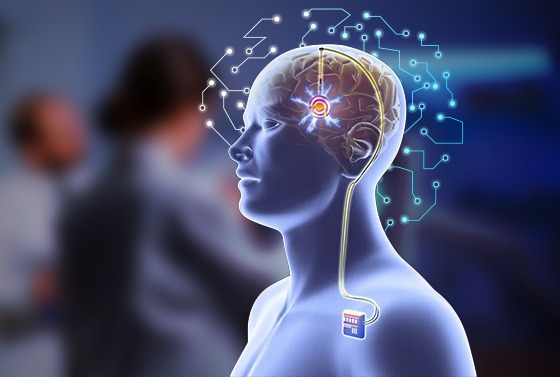
At its core, Adaptive Deep Brain Stimulation is an advanced form of Neurostimulation designed to deliver electrical currents only when and where they are needed. Often described as a "pacemaker for the brain," traditional DBS sends a steady, unyielding stream of pulses into targeted neural circuits. In contrast, Adaptive DBS acts with intelligence and restraint.
By listening to brain signals in real-time, Adaptive DBS monitors the neural activity associated with specific symptoms—such as tremors, rigidity, or slowness—and modulates its output instantly. This real-time responsiveness ensures that therapy matches the patient's exact clinical state at any given moment of the day or night.
To understand why this technology is such a monumental leap forward, it helps to look at the mechanics behind traditional DBS vs adaptive DBS.
The magic of a closed-loop system relies on the detection of local field potentials (LFPs)—electrical signals generated by populations of neurons. In Parkinson's disease, excessive synchronization or specific frequency bands (such as beta oscillations in the basal ganglia) serve as reliable neural biomarkers for stiffness and bradykinesia.
When the implanted neurostimulator detects an elevation in these biomarker bands, it automatically increases stimulation to suppress the symptom. When the biomarker levels normalize or drop, the device scales back its output. This seamless, biomarker-driven therapy ensures optimal symptom management without unnecessary electrical exposure.
The shift from constant stimulation to a responsive paradigm unlocks several profound clinical and lifestyle advantages for patients seeking effective Parkinson's disease treatment:
While initial clinical successes have largely centered on Parkinson's disease, the broader horizon of Adaptive Deep Brain Stimulation extends far beyond. Researchers and biomedical engineers are actively investigating how closed-loop neuromodulation can be applied to a wider array of chronic neurological disorders.
Ongoing clinical trials are exploring its efficacy in essential tremor, dystonia, epilepsy, and even treatment-resistant psychiatric conditions like obsessive-compulsive disorder (OCD) and major depressive disorder. As Neurostimulation technology matures, future devices will likely feature more sophisticated algorithms capable of tracking multiple biomarkers simultaneously, ushering in an era of ultra-personalized neurorehabilitation.
Adaptive Deep Brain Stimulation represents a paradigm shift in how we treat complex neurological conditions. By moving away from rigid, constant currents and embracing a smart, responsive, closed-loop approach, modern medicine is offering patients greater autonomy, fewer side effects, and a higher quality of life.
Question 1: Is Adaptive DBS widely available now?
Answer: Yes, Adaptive DBS is available at our centre.
Question 2: How does it differ fundamentally from standard DBS?
Answer: The primary difference lies in the "loop." Standard DBS is open-loop (running constantly regardless of symptoms), whereas Adaptive DBS is closed-loop, listening to brain signals via LFPs and adapting its stimulation in real-time.
Question 3:Will I still need medication if I have an adaptive system?
Answer: Yes. Neuromodulation works synergistically with medical therapies. However, better-optimized brain stimulation may help smooth out medication fluctuations and, in some cases, allow for better overall management under a neurologist's care.
Caritas Neuro Sciences
May 2026
Caritas Neuro Sciences
May 2026