Caritas Heart Institute
Can Heart Attacks Be Prevented? – A Real- Life Story
May 2026

Author: Dr. Rajesh M. Ramankutty, Chief - Cardio Thoracic & Vascular Surgery & Robotic Surgery
For decades, cardiac surgery centered on treating disease, typically through a median sternotomy that provides excellent exposure but causes substantial surgical trauma, significant pain, prolonged recovery, and visible scarring.
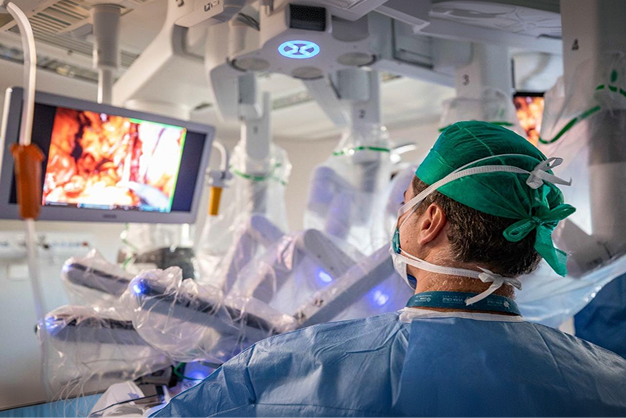
Robotic Cardiac Surgery using the da Vinci Xi Surgical System is changing that paradigm by prioritizing the patient’s experience and speed of recovery. Using small port incisions instead of a full sternotomy in carefully selected patients, robotic-assisted cardiac surgery and minimally invasive cardiac surgery approaches minimize tissue trauma, preserve the chest wall, and yield superior cosmetic results. At present most procedures use endoscopic ports plus a small working incision; totally endoscopic robotic cardiac operations are emerging and may become widely available within 1–2 years, although global adoption has not yet been achieved.
Robotic systems expand the reach of robotic CVTS surgery and minimally invasive cardiac surgery. Patients who are poor candidates for conventional minimally invasive techniques because of anatomical or technical limitations can often undergo safe, effective procedures with robotic assistance using the da Vinci Xi platform.
For the surgeon, robotics offers exceptional visualization and control: a high-definition, three-dimensional image with up to 10x magnification, tremor filtration, and wristed instruments that enable precise movements within confined spaces impossible by hand alone. These advantages translate intraoperatively into greater surgical precision, reduced blood loss, less tissue handling, and lower complication rates.
Postoperative benefits for patients commonly include significantly less pain, reduced transfusion requirements, faster mobilization, lower wound-infection risk, shorter ICU and hospital stays, and smaller, more acceptable scars. Many patients are discharged within 72 hours; those with desk jobs may return to work in about three days, with physically demanding activity often possible within a week depending on individual recovery and physician guidance. These benefits make robotic heart surgery an increasingly preferred option for eligible patients.
More than a technological innovation, robotic cardiac surgery represents a patient-centered philosophy: success is measured not only by cardiac repair but by restoring life with minimal disruption. As da Vinci Xi robotic surgery technology evolves, its real promise lies in combining precision with compassionate care—shortening recovery, reducing morbidity, and helping patients resume normal life sooner.
Caritas Heart Institute
May 2026